For over 30 years, I’ve used Merckens chocolate melts for candy making. It’s been tradition, my comfort zone, and a way I’ve made candy consistently without fail my entire life.
So many of our customers love Merckens chocolate melts because they’re easy to use and taste absolutely delicious. One of my favorite things about them is how beginner friendly they are. People start by making lollipops and before they know it, they’re painting molds or making cream-filled chocolates. They’re a true confidence builder.
Here’s something that surprises a lot of people. Merckens chocolate melts aren’t technically real chocolate. (Insert audible gasp.)
They’re a high-quality candy coating wafer, and that matters. When it comes to chocolate, there are four big things we care about:
- Shine
- Snap
- Mouth feel
- Taste
Merckens melts are formulated to meet all of those standards, which is why so many people can’t tell the difference.
Learn more about chocolate melts vs. real chocolate and what you need to know here.
Real chocolate is made with cocoa butter, which melts at body temperature and gives that classic smooth melt-in-your-mouth feeling. But cocoa butter requires tempering to behave properly.
Why I Finally Learned to Temper Chocolate
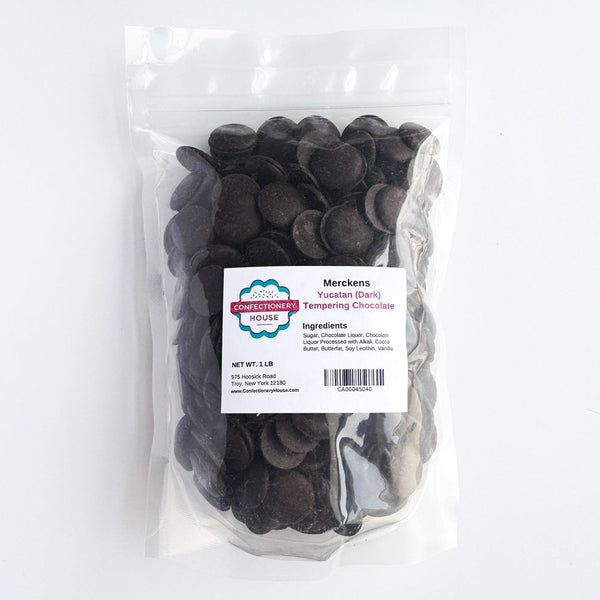
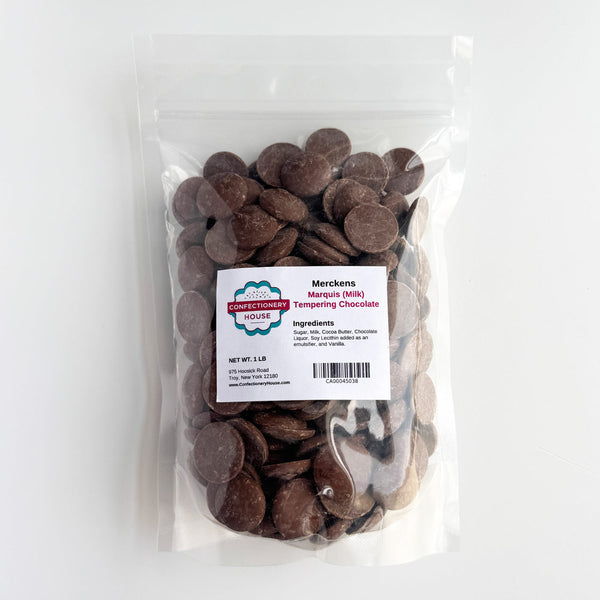
Merckens makes a line of delicious real chocolate wafers made with cocoa butter, Marquis (Milk Chocolate) and Yucatan (Dark Chocolate).
For years, I barely mentioned them.
Why?
Because I was terrified of tempering.
It felt completely out of my league. The chocolate costs more, and I didn’t want customers to feel like they wasted money if it didn’t work out. Plus, Merckens melts are already so good and cost effective.
I reserved real chocolate for my ganache and truffle recipe. Sometimes I even used melts for that too.
But real chocolate has a different flavor profile. Not better, just different. Think everyday wine versus special-occasion wine. Or your favorite cheddar versus a fancy aged cheese. Both are great. One just feels a little more luxurious.
Eventually, I decided to face my fear and learn everything I could so I could help you succeed at home too.
And guess what?
Tempering is not nearly as scary as I thought!
What Does Tempering Chocolate Actually Mean?
Cocoa butter can solidify in several different crystal forms. When you temper chocolate, you’re encouraging it to form stable beta crystals.
Those crystals give you:
- Glossy shine
- Clean snap
- Bloom resistance (no gray streaks)
- Easy mold release
- Chocolate that does not instantly melt in your hands
There are several tempering methods, but I set out to find the easiest, most foolproof option for home candy makers.
That method is the seed method.
Before You Start: Important Beginner Tips
Please read this first. It will save you stress (and chocolate).
Have extra chocolate on hand
If your temper does not come together on the first try, you will need additional seed chocolate to reset the crystal structure. For that reason, I recommend buying a little extra beyond what your project requires. Think of it as practice insurance.
Practice with plain molds first
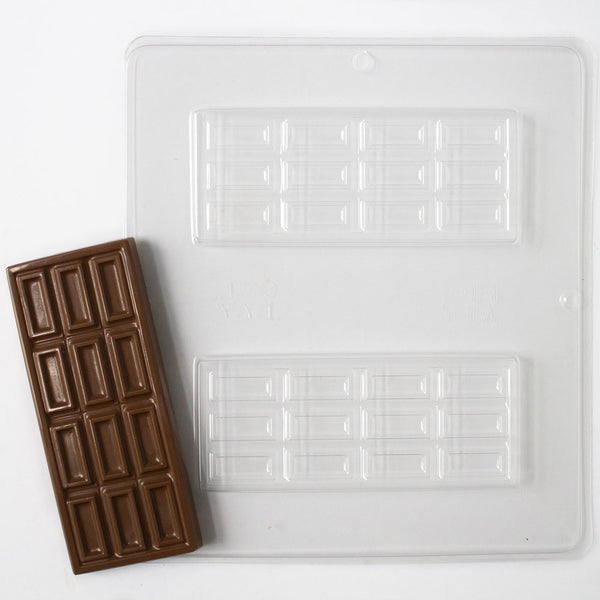
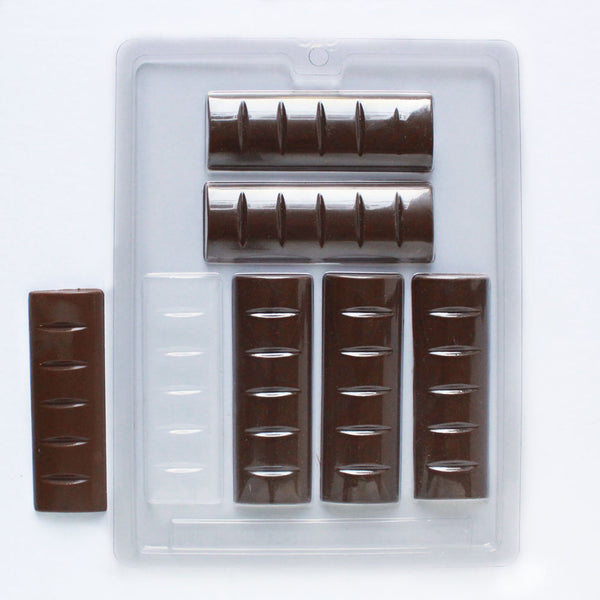
Skip candy fillings on your first attempts and choose an easy mold, like one of our chocolate bar molds to start out with. This lets you focus on learning the tempering process without pressure. If something does not set quite right, you can remelt and try again using fresh seed chocolate.
Don’t combine learning and holiday candy making deadlines
Do not plan to learn how to temper for the first time and make all your holiday candy in the same weekend. Buy one or two pounds and plan to play. Mistakes are part of the process, and they are edible.
A word of warning. There is a lot of stirring involved. I stirred so much chocolate during this process that I gave myself a blister.
Why I Use the Microwave Instead of a Double Boiler
You can temper over a double boiler. Many people love that method.
I prefer the microwave.
Water near chocolate gives me anxiety. One tiny drop can seize an entire batch. Microwaving in a glass measuring cup feels safer and cleaner for me.
Use whichever method you’re comfortable with.
A laser thermometer was also a game changer. No chocolate-covered glass thermometers to clean, which matters if you’re naturally a messy candy maker like me.
Milk and Dark Chocolate Temperatures
Milk, white, and dark chocolate traditionally all have slightly different temperature guidelines. When I first started researching tempering, this honestly made things feel more complicated than it needed to be.
In my testing with Merckens real chocolate, I found that both milk and dark chocolate worked beautifully using the same temperature ranges outlined below. Reheating back up to around 90°F made the chocolate more fluid and easier to work with, especially for molding.
As long as you stay under 90°F and do not overheat during reheating, this method produced consistent shine, snap, and easy mold release for me.
Merckens tempering wafers are surprisingly forgiving, which makes them great for beginners.
The Easiest Way to Temper Chocolate at Home (Seed Method)
This is the exact process I used with Merckens real chocolate wafers.
These temperatures worked for both milk and dark chocolate in my testing.
What You’ll Need
- 14 oz Merckens real chocolate wafers (divided)
- Microwave-safe glass measuring cup
- Thermometer (laser or traditional)
- Rubber spatula
- Patience and arm strength for stirring
Step 1: Separate Your Chocolate
- Place 8 oz wafers into your glass measuring cup
- Chop 6 oz wafers and set aside (this is your seed chocolate)
Step 2: Melt the Base Chocolate
Microwave in 10-second intervals, stirring between every round.
Even if it does not look melted, stir anyway. This prevents hot spots and burning.
Once fluid, continue heating until the chocolate reaches 120 to 122°F
Step 3: Seed the Chocolate
Now it’s time to add your chopped chocolate.
Add about 2 oz at a time and stir continuously until melted
Stirring is critical. Agitation encourages proper crystal formation.
Let the temperature drop to 80 to 82°F
If you’ve added all the seed chocolate and the temperature has not dropped enough yet, keep stirring and allow the chocolate to rest briefly while monitoring the temperature.
Keep stirring intermittently.
Step 4: Reheat to Working Temperature
Once you reach 80 to 82°F, gently reheat in short 5 to 10 second bursts until you reach:
88 to 90°F
This will happen quickly, so take great care, this is your working range.
Stay below 90°F.
At this point, your chocolate is tempered and ready for molding or dipping.
Try to work efficiently and maintain this temperature range while you work.
The Last Bite
Yes, there is stirring. Yes, there is patience involved.
But the shine, snap, and satisfaction at the end are worth it.
Merckens real chocolate is far more forgiving than I ever expected. If I went slightly above or below temperature, I found that it still produced a great result. Having extra chocolate on hand to use as seed takes the pressure off and lets you learn without fear of wasting anything.
If you’ve been scared to try tempering like I was, I hope this helps you take that first step.
And remember, you can always eat the mistakes.